THE SCI ART COLLABORATIVE PROGRAM (SACP)
A Paul Robeson Galleries Initiative
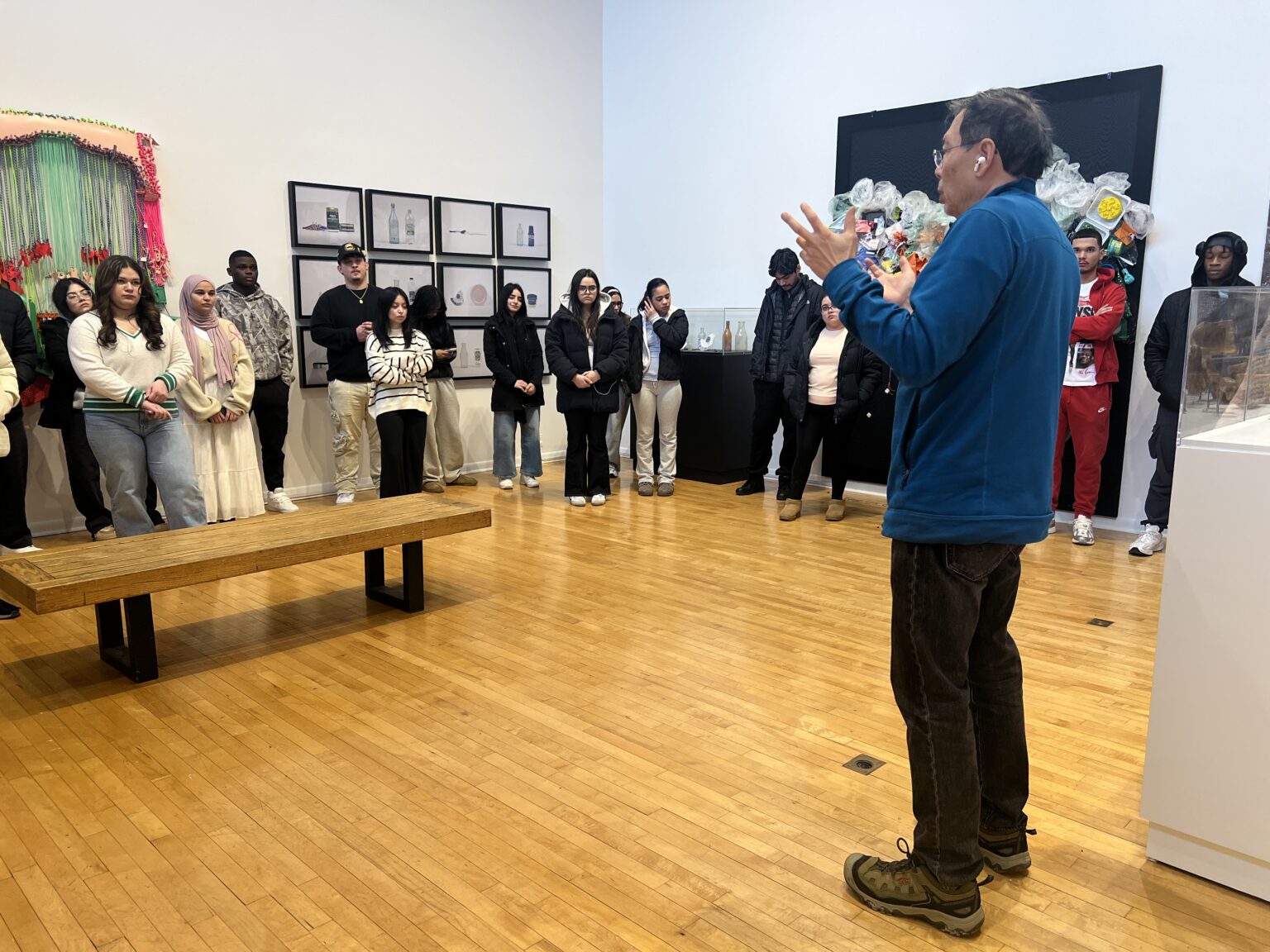
Professor Jack Tchen from The Price Institute speaking to his class in the CONSUMED exhibition, January 2026.
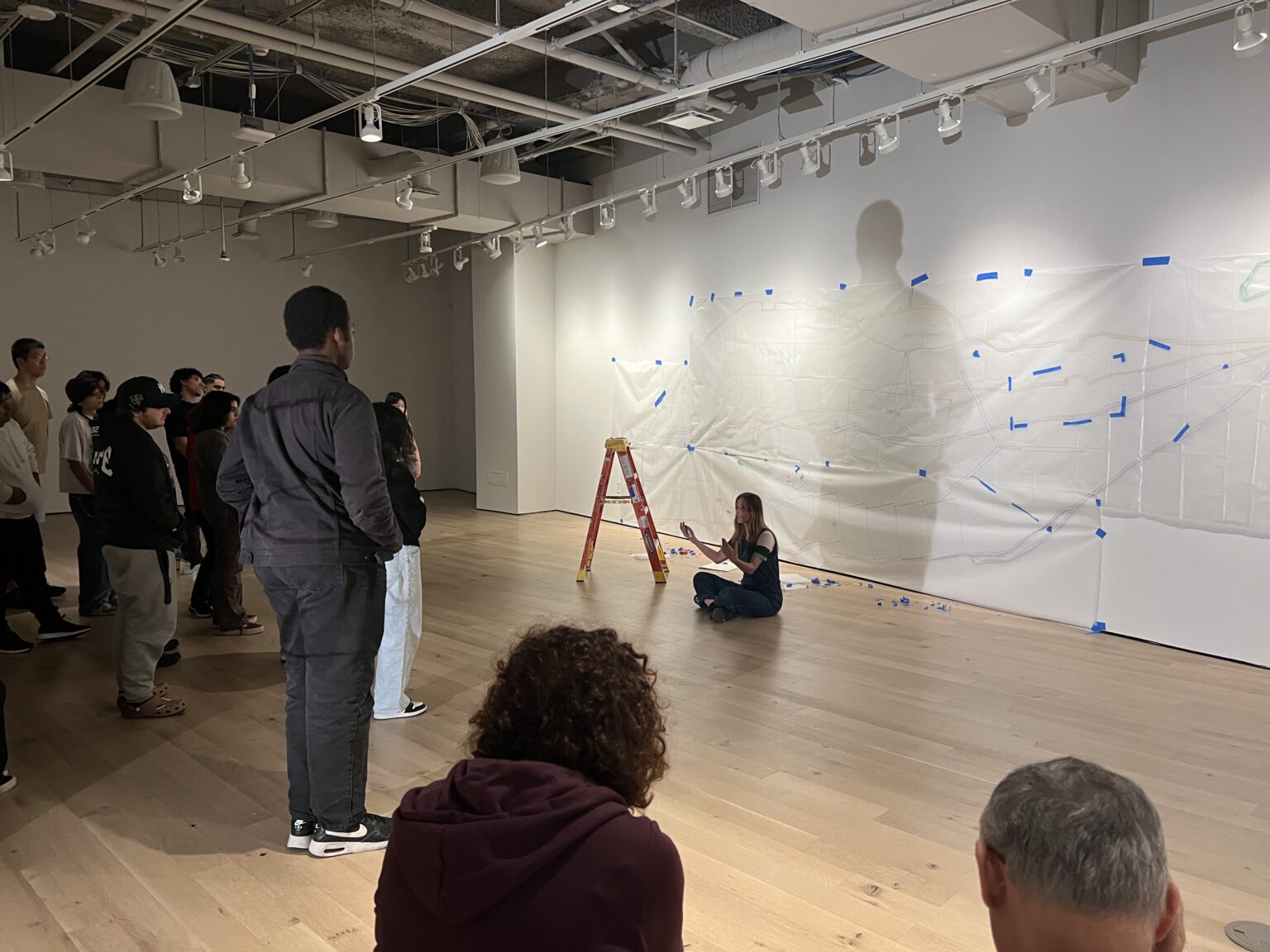
Inaugural PRG Sci-Artist in Residence Andrea Haeggi speaking to students as she prepares for her solo show at the Campus Center Gallery.
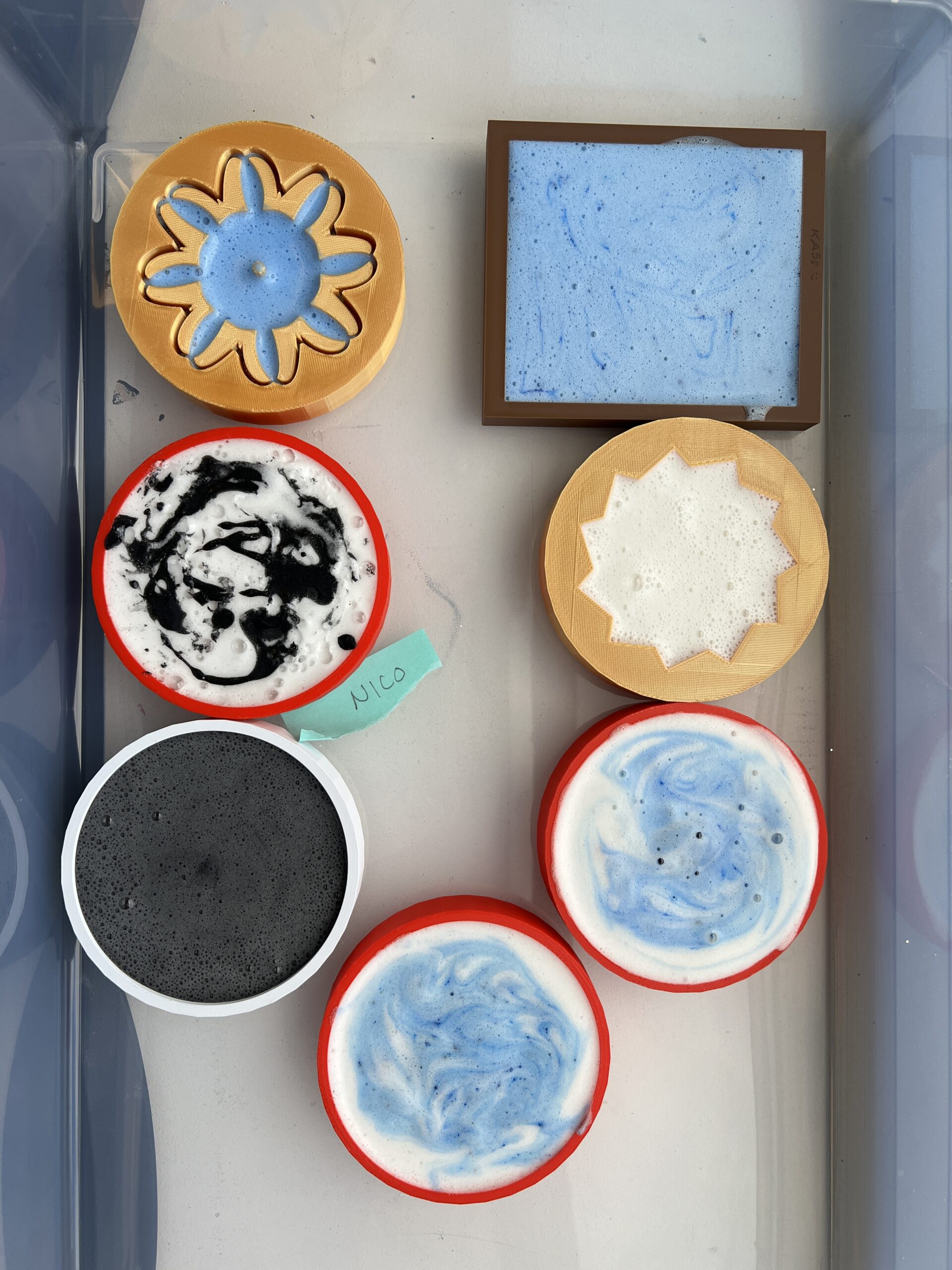
3D molds printed by students at Form Design Studio with various forms of bio-plastic.
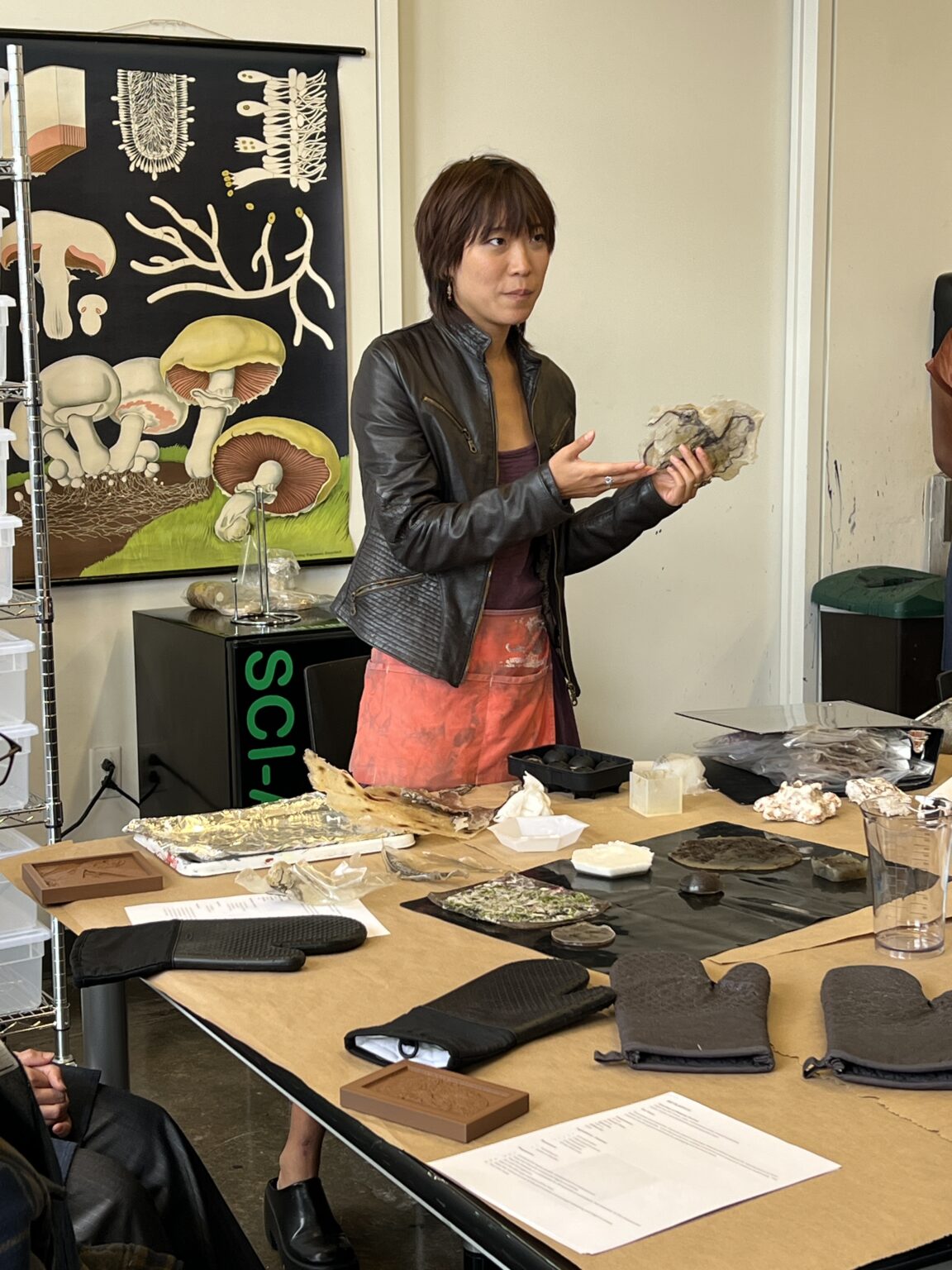
Invited Guest Speaker, Sci-Artist Grace Jung speaking to students about environmentally friendly alternatives to petrochemical based plastics.
What
Since 2024, the Sci-Art Collaborative Program (SACP) has generated a campus wide series of events, programs, workshops and exhibitions which bring together people around the arts and sciences. SACP is an attempt to break down traditional barriers (physical and psychological) within the university, in order to achieve unique and collaborative outcomes. SACP introduces people from different departments, centers of study, on and off campus populations. This project fosters interdisciplinary collaboration, new initiatives, and creative outcomes.
Common elements for both the sciences and the arts is the ability to practice, have logical, factual critical thinking skills and creativity to function as a scientist or practice as an artist. The emphasis is on sustainability, the environment and ecosystems, recycling. Conceptual underpinnings relate to the physical sciences, social sciences and philosophy.
Several of the SACP initiatives have a hands-on, direct engagement component, enhancing the learning experience for participants. The SACP aims to develop critical thinking skills, problem solving, increase retention, and provide engaging environments for learning. This process draws on multiple senses and is inherently a social experience. One of the struggles that Universities are finding in the post-pandemic era is a fracturing of the fragile community and socials aspect of the university experience. SACP provide options for engagement that correlate to the classroom curriculum and also general life education outside the formal learning environment.
Part of the program includes a series of pop-up exhibitions and presentations, programs, across campus will aim to create a Wunderkammer- like experience, where faculty, staff and students are directly, and through osmosis, learning about what is happening on this campus.
Who
Founding Members of Advisory Team
- Anonda Bell Director & Chief Curator, Paul Robeson Galleries
- Alexandra Chang Associate, Professor of Practice in the Department of Arts, Culture and Media, Interim Associate Director of the Clement A. Price Institute & Associate Director of the American Studies Program at Rutgers University-Newark
- Lily Khadempour Assistant Professor, Department of Earth and Environmental Sciences, Founder of the Khadempour Lab
- Kevin Lyons Associate Professor of Professional Practice, Business School
- Keary Rosen Professor of Professional Practice, Department of Arts, Culture and Media
Audience
- Rutgers University Students (all stages of academia and all subject matter).
- Greater Newark Community (off campus populations, including K-12 educational institutions).